 OFFICIAL MELIAN FOUNDATION PROJECT
Maji Salama kwa Jua — Safe Water from the Sun
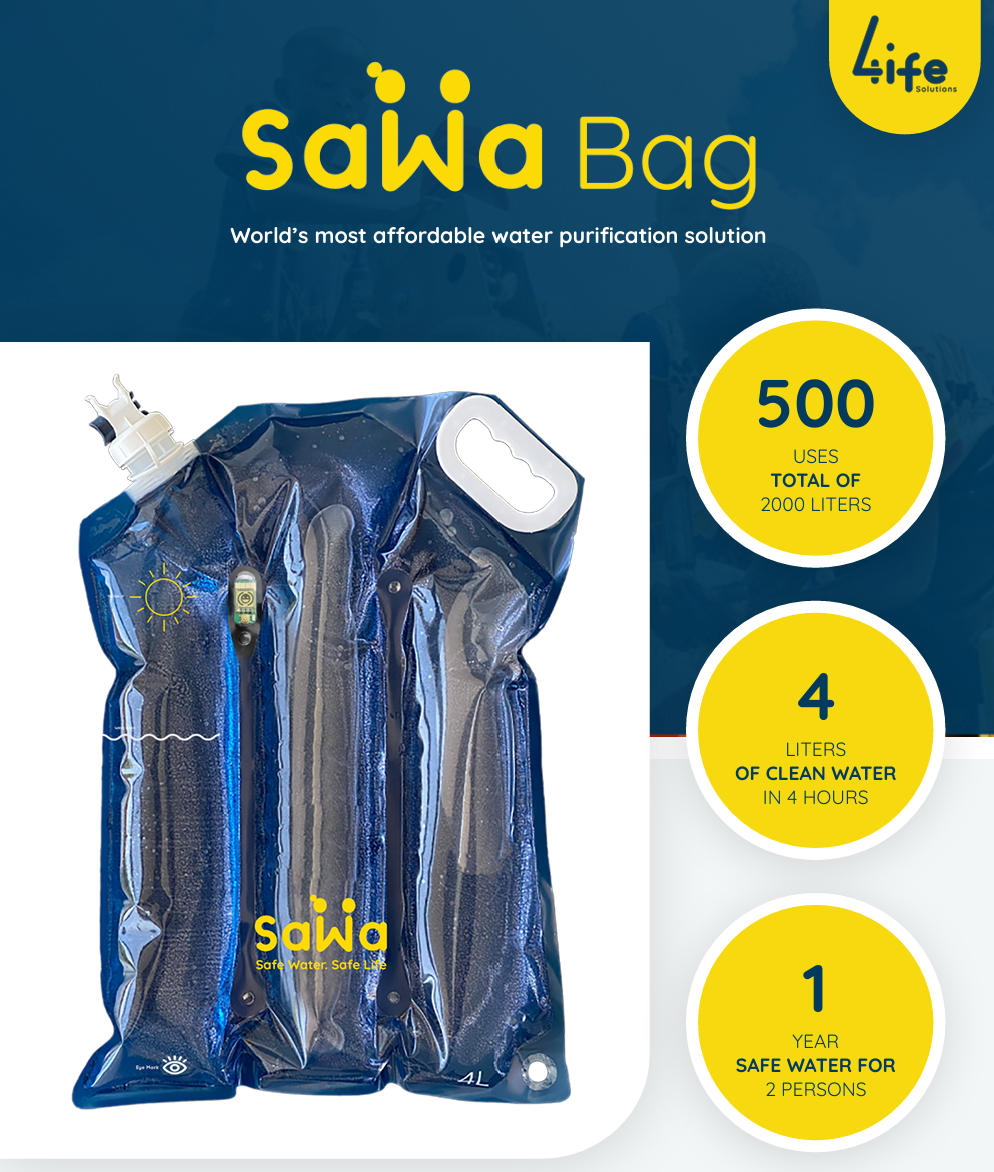
Maji Salama kwa Jua (“Safe Water from the Sun”) is a 10-month national digital fundraising campaign led by Melian Foundation, the Tanzanian implementing partner of 4Life Solutions, to put solar water purification into homes, schools and primary healthcare facilities across rural Tanzania. Tagline: Kila Nyumba, Kila Shule, Kila Zahanati — every home, every school, every clinic. Campaign slogan: $10 can save a life from waterborne diseases. $10 buys more than one SaWa Bag (US$5), enough saf
About this project
Maji Salama kwa Jua (“Safe Water from the Sun”) is a 10-month national digital fundraising campaign led by Melian Foundation, the Tanzanian implementing partner of 4Life Solutions, to put solar water purification into homes, schools and primary healthcare facilities across rural Tanzania. Tagline: Kila Nyumba, Kila Shule, Kila Zahanati — every home, every school, every clinic.
Why now:
RUWASA has brought rural water coverage to 85.2%, but 1,575 villages are still unserved, and the agency reports a funding gap of about TZS 3 trillion. Where water does flow, much of it is still drawn from unprotected wells and springs and stored at home, where it is easily recontaminated. SaWa treats water at the point of use for about a quarter of a US cent per litre, so it works alongside the pipes RUWASA is building, not in place of them.
Climate outcome:
by replacing wood-fired boiling, the SaWa units distributed are estimated to avoid about 70,500 tonnes of CO₂ and save about 261,000 trees over their lifetime (at least ~42,300 tonnes and ~156,600 trees in a conservative case). SaWa replaces boiling with sunlight. Melian Foundation estimates that making 2,000 litres of drinking water by boiling burns wood equal to two large trees and emits about 540 kg of CO₂.
The problem: access is not the same as safe water
• Coverage has grown, but the last mile is hardest. RUWASA reports rural water coverage rose from 64.1% in July 2019 to 85.2% in June 2026, reaching 10,758 of 12,333 villages. It is now looking for alternative financing to reach the remaining 1,575 villages, and plans to get to at least 90% by 2030/31 against a financing gap of about TZS 3 trillion.
- Some regions are well behind the national figure. RUWASA Kigoma has reported rural coverage of 72% in the region.
- Households still drink from unsafe sources. In the Tanzania Red Cross evaluation in Uvinza (Kigoma) and Tanganyika (Katavi), unprotected wells were the most common source in the dry season. In Uvinza most households fetched pond or river water every day.
- Cholera keeps coming back. Those two districts were chosen because of repeated cholera outbreaks, which get worse in the wet season when water is easily contaminated.
- Unsafe water costs families money and time. 58% of surveyed households spent TZS 500–2,000 a day treating drinking water, mostly by boiling, and 15% spent four or more hours a day preparing it.
- The global picture. Melian Foundation’s materials cite 2.2 billion people without safe drinking water and a child dying from waterborne disease every 90 seconds globally.
The climate case: less charcoal, fewer trees cut
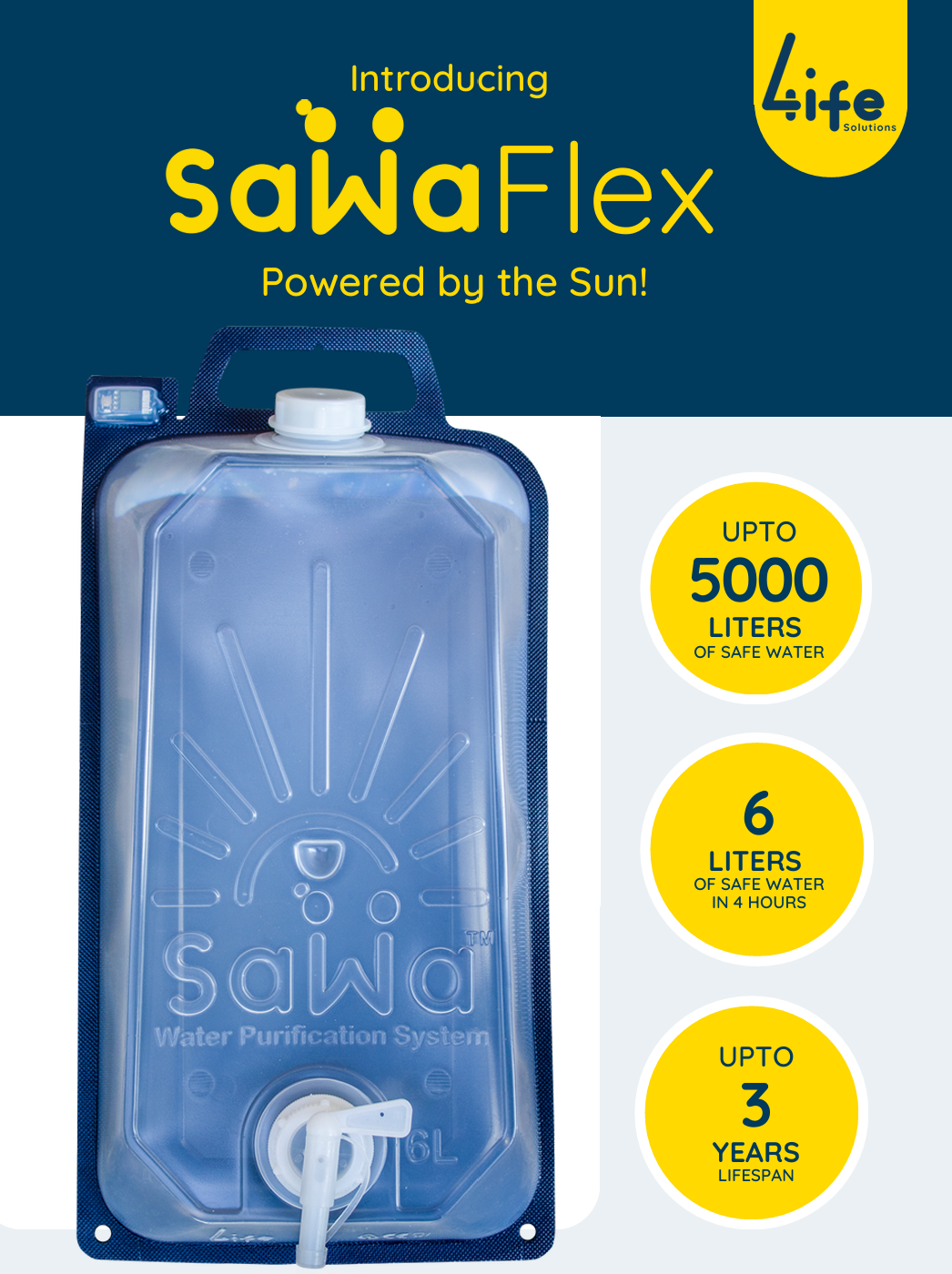
Boiling drinking water burns wood, and Tanzania’s forests are paying for it. Firewood is the main cooking fuel for 84.8% of rural households and charcoal for 60.5% of urban households; biomass supplies about 90% of household cooking energy. The National Environmental Policy 2021 estimates that cutting for firewood, charcoal and construction clears about 469,420 hectares of forest a year. The government has also directed institutions to stop using charcoal and firewood, so SaWa Flexi gives schools and clinics a fuel-free way to provide drinking water.
Purpose & objectives
The Purpose:
Maji Salama kwa Jua (“Safe Water from the Sun”) is a 10-month national digital fundraising campaign led by Melian Foundation, the Tanzanian implementing partner of 4Life Solutions, to put solar water purification into homes, schools and primary healthcare facilities across rural Tanzania. Tagline: Kila Nyumba, Kila Shule, Kila Zahanati — every home, every school, every clinic.
Climate outcome: by replacing wood-fired boiling, the SaWa units distributed are estimated to avoid about 70,500 tonnes of CO₂ and save about 261,000 trees over their lifetime (at least ~42,300 tonnes and ~156,600 trees in a conservative case).
Who benefits
The Fundraising Beneficiaries includes;
- Replace boiling with sunlight in 54,000 households, 150 schools and 100 health facilities
- Official target
- USD 1,000,000
- Status
- Active
- Starts
- 01 Mar 2027
- Ends
- 31 Dec 2027
Project media
Our fundraisers
0 ambassadors raising funds for this official project
No fundraisers yet — be the first to rally your friends for this project.
Community activity
Celebrate every gift — leave some love or a kind word.
No donations yet. Be the first to give — your gift will appear here.